
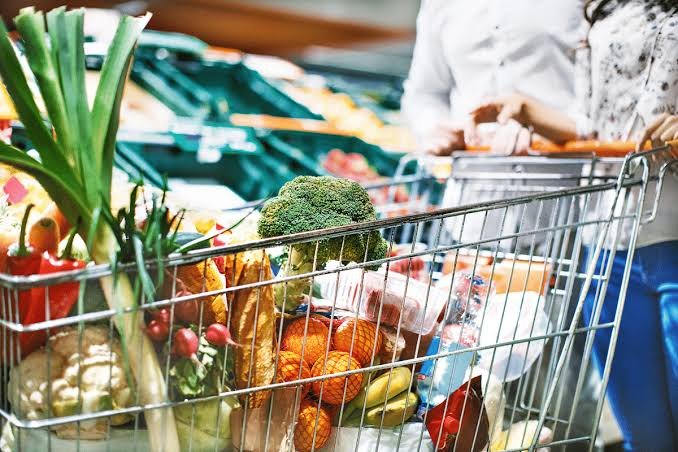

Your grocery bill is lying to you. Not in some abstract, “maybe I overspend a little” way — American households waste an average of €1,500 annually on preventable mistakes, and most of them happen before the cart even hits the produce aisle. That’s not a rounding error. That’s a vacation. A car payment. Several months of a gym membership you’ll actually use.
The average household runs a grocery budget of around €8,200 per year as of 2026 baseline data. Which sounds manageable, until you realize a significant chunk of that is pure behavioral leakage — money hemorrhaging out through habits so normalized they don’t even feel like mistakes anymore. So let’s just rip through them.
Shopping Without a List Is Not a Personality Trait
Some people genuinely brag about “winging it” at the grocery store. “I just grab what looks good!” Cool. You’re also spending 19–23% more per visit than people who wrote six things on a napkin before walking in. That’s not an opinion — that tracks directly with consumer purchase behavior research on unplanned spending variance. One extra visit’s worth of “winging it” per week computes into hundreds of dollars annually.
The list isn’t about being rigid. It’s about having a cognitive anchor when you walk past an end-cap display of snacks you definitely didn’t need. Without it, the store’s layout — and yes, it’s specifically engineered — does the thinking for you. Impulse purchases already account for 38% of average household overspending on groceries. A list is genuinely the cheapest intervention available. Free, actually. Yet here we are.
The Hunger Tax Is Very Real and Very Expensive
Skipping breakfast or a slot spin at BetCity before a grocery run sounds like a time-saving move. It isn’t. Hungry shoppers spend 31% more per trip on average, a pattern consistently flagged in consumer spending behavior studies. That 31% isn’t distributed across “healthy extras” either — it clusters heavily in ready-to-eat items, processed snacks and whatever looked good near the checkout. Hunger bypasses the prefrontal cortex faster than any marketing campaign ever could.
Pair that with evening shopping — because evening shoppers spend roughly 16% more than morning shoppers — and you’ve stacked two behavioral traps on top of each other. Post-work, hungry, slightly decision-fatigued? The store is ready for you. You are not ready for the store.
Here’s a simple comparison of shopping condition impact on spending variance:
| Shopping Condition | Spending Impact | Why It Actually Happens |
| No list | +19–23% per visit | Store layout fills the decision vacuum |
| Shopping hungry | +31% per trip | Impulse-driven, calorie-targeting purchases spike |
| Evening shopping (vs. morning) | +16% per visit | Decision fatigue after a full workday — classic |
| No spending tracking | +22–28% monthly | No feedback loop means no correction |
Brand Loyalty Is Costing You Roughly €480 a Year
Brand loyalty isn’t trust. At the grocery store, it’s mostly just inertia dressed up in familiar packaging. Households that stick rigidly to name brands — without ever stress-testing whether the store brand does the same job — overspend by €480 annually compared to shoppers who switch strategically. €480. For effectively identical pasta. Or canned tomatoes. Or oats.
“I switched to the store-brand cereal for a month and honestly couldn’t tell the difference,” said one anonymous respondent in a consumer habit tracking survey. “Now I only go back to name brands when there’s actually a reason to.” That’s the whole move, really. Strategic switching — not brand abandonment, just conscious comparison — paired with unit price analysis reduces effective costs by 18–24%. Unit price, by the way, is the number on the little shelf tag that nobody reads. Start reading it.
Bulk Buying Without Inventory Tracking Is Just Expensive Hoarding
Bulk buying has this reputation as the financially responsible option. And it can be — genuinely. But households that bulk-buy without tracking what they already have at home hit a 28% food waste rate. Which means more than a quarter of that “smart savings” purchase ends up in the bin. The math stops looking clever pretty fast.
The mistake isn’t buying in bulk. It’s buying in bulk blind. No inventory check, no consumption rate awareness, no actual system. Just vibes and optimism about how much pasta this family will eat before it expires. The fix isn’t complicated — it’s just marginally inconvenient enough that most people skip it.
The most frequent bulk-buying errors cluster around these categories:
- Perishables purchased in “family size” quantities for a household of two (the math was always wrong here)
- Duplicates — buying more of something you already have three of at home because you forgot to check
- Trend items that seemed like a great idea, used once, taking up shelf space since March
- Condiments. Specifically mustard. There is always too much mustard.
Discount Chasing Makes Your Basket 34% Heavier
This one genuinely surprises people. Chasing discounts — as a primary strategy, structuring the whole trip around what’s on sale — correlates with a 34% larger average basket size. You went in for deals. You came out with more stuff. That’s not savings. That’s the illusion of savings wrapped around a bigger spend.
The discount-chasing trap works because “50% off” short-circuits rational volume assessment. The same impulse fires at a supermarket BOGO sticker. Different context, identical mechanism.
“I thought I was being smart, buying everything on the yellow sticker,” one shopper noted in an anonymous budget tracking forum. “Then I actually added up what I spent versus what I planned. It wasn’t close.” Tracking is the counterweight here — households with active spending metrics reduce monthly grocery costs by 22–28% compared to untracked shoppers, according to household budget research data.
To pull it together, here’s a rough damage assessment across all five mistakes:
| Mistake | Annual Cost Estimate | Primary Mechanism |
| Shopping without a list | ~€800–€1,100 extra annually | Unplanned purchase volume increase |
| Hunger-driven shopping | +31% per trip compounding | Impulse clustering near checkout areas |
| Rigid brand loyalty | €480/year above necessary spend | Premium paid for packaging familiarity |
| Bulk buying without tracking | 28% food waste rate | Expired or unused inventory |
| Discount-chasing behavior | 34% larger basket spend | Volume inflation from promotional triggers |
Five mistakes. One common thread. None of them require willpower or some dramatic lifestyle overhaul — they just need a small system to replace the autopilot. The €1,500 average annual waste isn’t inevitable. It’s a default. And defaults can be changed.